up:: 099 MOC Anotações
Recap
Locales → expressivity of value (money) (?) → “contextual logic”, how different values in different comm spaces can cohere.
How does the world look from the standpoint of commodities?
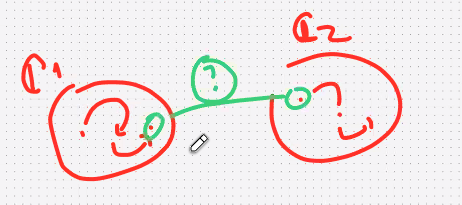
How do commodities in different comm spaces relate? Should we analyze them only in a bigger comm space? Is there another way?
New definition: capital process (
Note that
Political orientations in the ways of relating objects/commodities within some logical space:
- “Conservative”: keeping a given logical space as it is (‘old’)
- “Reactionary”: increase logical space for the sake of creating new things inside the old space (‘new old’)
- “Emancipatory”: including new logics within the space, without affecting the old logic (‘new new’)
Capital is reactionary, yes, but it’s not because it is reactionary that it is capital! There are political actions which brought capital to the forefront.
Affinity dimension: e.g. comparing two “hammers” (equivalent) can become “my mother’s hammer” and “that stranger’s hammer” (not equivalent).
Section 13: Commodity consumption
Industrial capital doesn’t leverage layer divergence, but finds different valorization spaces within the commodity layer. (Still depends on other layers for re-production!)
Consumption: The consumption of an object
Productive consumption: produces objects with new/more uses.
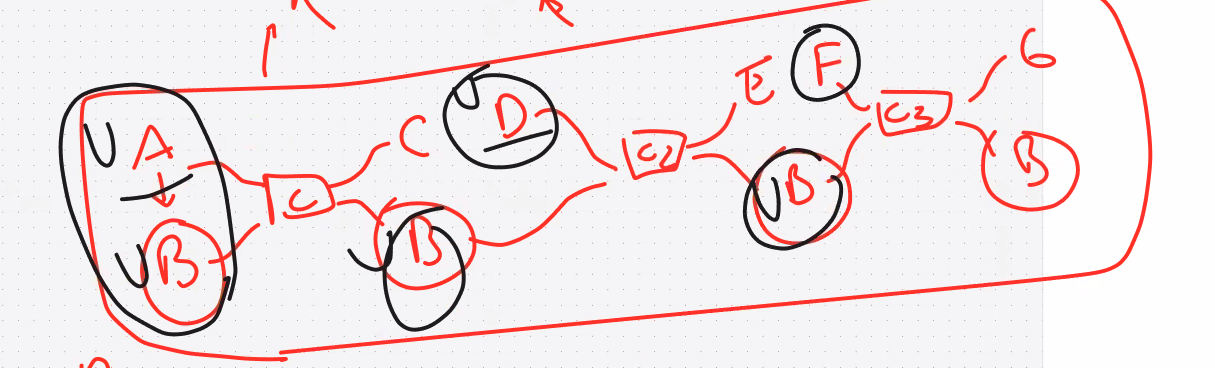
Directed consumption: Note that the use of
It’s claimed that this
(On the domain
Section 14: Commodity production
Given some process
: Total component, the product of commodities which were used to make it. Components to its reproduction are also produced : Partial component, it’s not the product of commodities, but its reproduction needs components used to be bought/are produced : not a product, and its reproduction is not in the production process
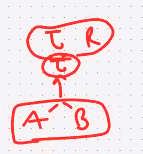
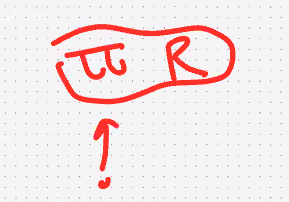

Section 15: On surplus value
Section 16
The space of capitals forms a Presheaf Topos: capitals cohere not in a global sense. As far as capital is concerned, labor’s reproduction is something that is a “hole”, that it can’t see.
The smallest necessary structure for capital is a space in which…??
Subobject Classifier
For instance, for some process
Exponent Object
“Truth values” of processes are their degree of (capitalistic) exploitability. Exploitable sites.
Sites are:
- Materially irreducible: contains some predicate that is not already tabulated by allegories
- Multiply tabulated: exists, to some degree, in all dimensions (comm, prop, affinity)
- Has other predicates (?)
- Potentially conforming:
some point of view which is irreducible
Sites can only be defined from the standpoint of some object, e.g. labor in terms of capital.
The main site is “the gap between
It’s related to Alain Badiou’s theory of reactionary politics:
The definition of labor as above has two dimensions: extensional and resolutive.
- Labor is indexed to units of time. An extensional strategy is related to an extensional increase, and one seeks to employ more
than the (socially) necessary time to reproduce labor power. (Absolute surplus) - New resolutions allow for extraction of extra surplus: the intensification of time, a “less porous” resolution of labor time.
Other pair of axes are independent and dependent strategies:
- Independent strategies
- Dependent strategy: individual strategies are dependent of others’ strategies — relative surplus
| Independent | Dependent | |
|---|---|---|
| Extensional | Individual absolute surplus | Generalized absolute surplus (e.g. worsening labor regulations/conditions) |
| Resolutive | Extra surplus | Relative surplus |
The relative surplus (a resolutive dependent strategy) is the first collective capital strategy which can be deducted from capital’s movement — it’s what Marx calls “his main contribution” (supposedly, as per what Gabriel Tupinambá said tonight).
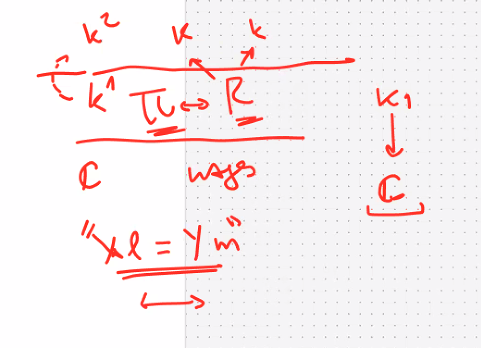
Surplus extraction is obtained through a different level than simple circulation.
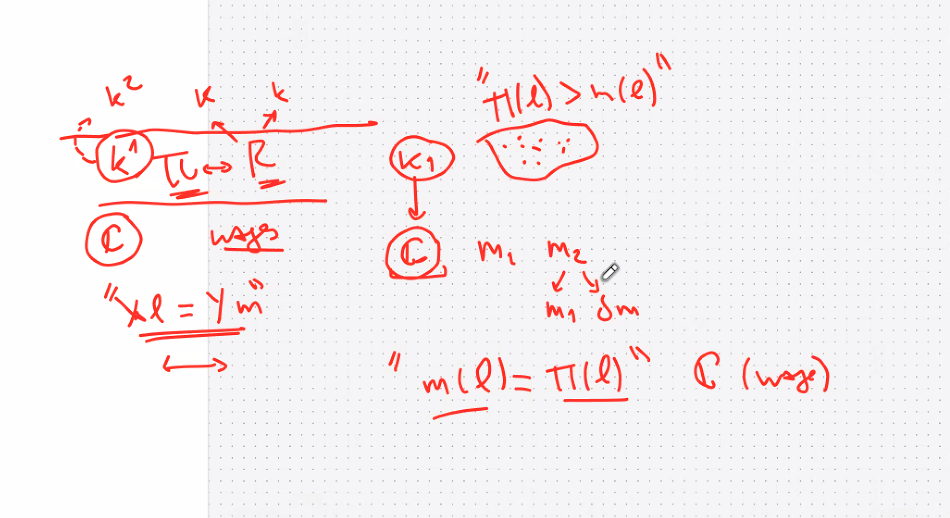
Wages (equality of values) are seen at the circulation level; surplus (inequality of values) is seen at the capital level. Wages are seen in different ways, they’re expressed in price differently: through time worked or through product produced.
“
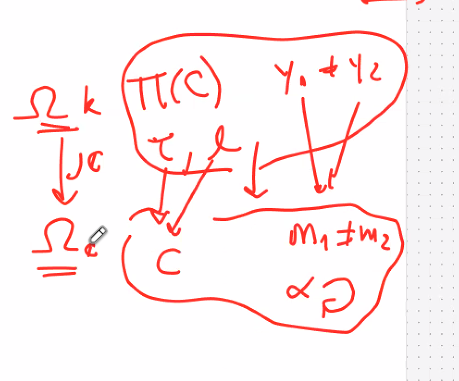
These “downward restrictions” see these lower-level processes homogeneously, mistifyingly.
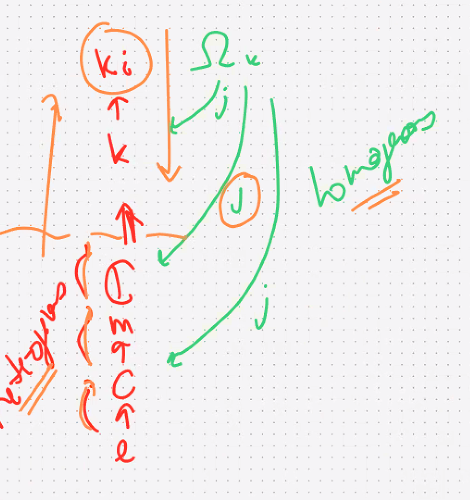
Summary/claims
- Capital arises from money through a political move
- We see different levels arising through this framework, which tell new things about the lower levels. They’re “hierarchical”, which will be called “organizational depth”.
Some things can be done, for instance scaffolding: new structures can be added at some level, thus not affecting lower levels, only affecting levels above it!
The “billions” of dollars of a billionaire are mostly a measure of his power over classes, not of his personal usufruct.