up:: 099 MOC Anotações
The analysis through Category Theory aims to bridge the “space of organizations” with the “space of capital”.
Why is the appearance of capitalism what it is? Why do we see exchanges as depending on prices, not value? Because we’re talking about property (laws, rights, …) and how it operates.1
\usepackage{tikz-cd}
\begin{document}
% https://tikzcd.yichuanshen.de/#N4Igdg9gJgpgziAXAbVABwnAlgFyxMJZABgBpiBdUkANwEMAbAVxiRAEEQBfU9TXfIRQAmclVqMWbAELdeIDNjwEiogIzj6zVohABhbuJhQA5vCKgAZgCcIAWyRkQOCEjU8rth4icukwrgouIA
\begin{tikzcd}
A \arrow[rr] \arrow[rrd] &  & B \\
                         &  & C
\end{tikzcd}

% https://tikzcd.yichuanshen.de/#N4Igdg9gJgpgziAXAbVABwnAlgFyxMJZABgBpiBdUkANwEMAbAVxiRAEEQBfU9TXfIRQBGclVqMWbAELdeIDNjwEio4ePrNWiEAGFu4mFADm8IqABmAJwgBbJGRA4ISYT0s37iR86QAmLgouIA
\begin{tikzcd}
A \arrow[r] \arrow[rd] & B \\
                       & C
\end{tikzcd}

\\

% https://tikzcd.yichuanshen.de/#N4Igdg9gJgpgziAXAbVABwnAlgFyxMJZABgBpiBdUkANwEMAbAVxiRAEEQBfU9TXfIRQBGclVqMWbAELdeIDNjwEio4ePrNWiEABE5fJYKJl11TVJ0BhbuJhQA5vCKgAZgCcIAWyRkQOCCRREAY6ACMYBgAFfmUhEJhXHBBzSW0QVxSQOAALLCTfHjdPH0Q-AKQAZmoGLDB0uAhaqCyLdJyDDJKg6grEACZUrTYHTo9vKt7AgaHLEByAbkya8MiYoxUddywHHOSiromyqaRBkLr0qDpc+1a0tkXXAAIAXifXBdHqXPzksq4KFwgA
\begin{tikzcd}
A \arrow[r, "f"] \arrow[d, "h"] \arrow[rd, "h;f = f;g", dashed] & B \arrow[d, "g"] \\
C \arrow[r, "h;f"']                                             & D
\end{tikzcd}

\end{document}
Recap
Given a domain
[Mentions William Lawvere’s work on Dialectical Logic!]
Evaluating some object under some evaluation → value. When re-evaluating the object by coming from its value, it’s seen “from a different angle”, not merely its original object, but something more.
Need to explain this “kernel stability” and how it births the “commodity form”, and how this yields the “commodity allegory”
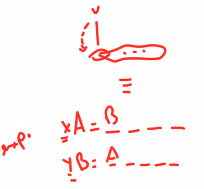
Given a commodity’s value, “seeing backwards” allows one to see all commodities equivalent to it. But there needs to be some consistency between commodities’ equivalents lists.
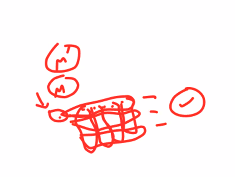
Thus, there must be some commodity which creates these coherent “grids” of equivalence of all commodities.
In this sense, changes in this new commodity — money —‘s value, then it translates into a list of all commodities equivalent to this value. So what
It’s not an evaluation to a Heyting algebra here! In this sense, there is an incarnation of value, and a lattice that is induced by it.
The price is the monetary expression of a commodity
So il faut de create some magnitude operator that takes some combination of commodities, and allow for it to “preserve” this “addition”. Formally, we seek some
An analogy given is that prices measure distances, but changing the space makes prices change more than merely changing distances — there are intrinsic factors to be taken into account.
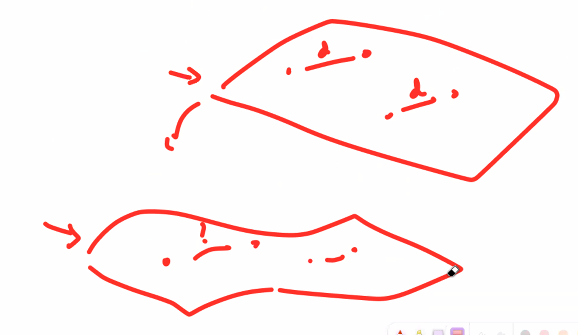
Another problem is how to determine the magnitude base:
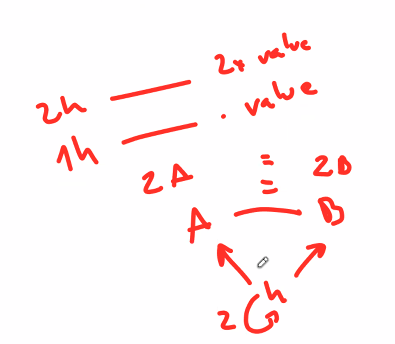
However, we need to find out what is this base, not pressupose it. It must be:
- Homomeric (changes in quantity maintain its quality as such)
- Operable
- Homogeneous
- “Covariance” (2x in something is captured by 2x of the given measure unit)
Conclusion (to be derived): labor is the most stable unit, as number of (comparable) commodities increases.
Chapter 8, Primer
Suppose that commodity exchange is not a value concept. We suppose here that, if
So knowing how some objects are property of given “peoples”, then exchanges occur when there are mutual alienation of commodities. There is some “layer convergence” when one layer (e.g. property) allows for the occurence of another (e.g. value).
Section 9, Primer: The problem of exchange composition
When we suppose the assymetry
Since we assume the layers of property and value, there can be different movements of both.
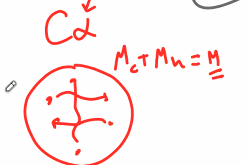
Different circulation spaces can be locally constant with regards to total money quantity (split quantities [10 → 5 + 5] + hoarded quantities [5 + 5 → 10]).
Then there is the problem of composing different circulation spaces.
However, there is the problem of commodity depletion: money can keep on circulating, but commodities vanish when they’re consumed!
- Merely increasing the circulation space, by commodifying more things, is only a temporary solution
- The production of goods solves both the return of commodities into circulation (under value conservation), and also the augmentation of the circulation space. Thus, production stabilizes a circulation space (Stabilizer of Group Action?
)
Mention of Função de Leontief — Leontief matrix — and Hawkins–Simon condition - Wikipedia.
Some Hegel
Space: “Here” and “there” are external negations of one another. Mereological thing, good for logic:
Time: “Now” and “after” are internal negations, and irreversible. Intransitive.
Scale: Microscopic can explain macroscopic, but macro can’t recompose micro exactly! (And also, some macro things can’t be explained by the micro things!) “Intransitive mereology”!
References
- YAO, Yuan; TUPINAMBÁ, Gabriel. A Primer on Political Phenomenology. 2021.
Footnotes
-
That’s why it’s important that Marx talks about the general law of capitalist accumulation: because it’s where the appearance of the phenomenon breaks down! ↩
-
011a MOC Capital I, Cap. 4. ↩